Choosing plants for Saudi Arabia means prioritizing genuine heat and drought tolerance above appearance alone, with Riyadh favoring dry-climate species like date palms and oleander while Jeddah additionally requires salt tolerance for coastal properties.
Plant selection is where more Saudi landscaping projects go wrong than almost any other single decision, usually because a species was chosen for how it looked rather than whether it could actually handle the local climate. This guide covers every major plant category relevant to a Saudi garden, species genuinely proven to perform, and exactly how selection should differ between Riyadh and Jeddah.
Understanding the Climate Challenge Before Choosing Any Plant
Every plant selection decision in Saudi Arabia starts with the same underlying reality: extreme summer heat, low annual rainfall, and soil conditions — sandy in Riyadh, humid and salt-influenced near Jeddah’s coast — that rule out plants chosen purely for appearance without regard to climate tolerance. A species that thrives in a magazine photo taken in a temperate climate often struggles badly here, which is why plant selection deserves as much research as any other landscaping decision.
This guide walks through the main plant categories relevant to Saudi gardens, species genuinely proven in this climate, and how selection differs between Riyadh’s dry heat and Jeddah’s humid coastal conditions.
Trees: Structure and Long-Term Investment
Trees represent the longest-term planting decision in any garden, since a poor choice doesn’t reveal its full cost until years later when root systems or canopy size become a genuine structural problem. Date palms remain one of the most reliable choices region-wide — native, heat-tolerant, and requiring comparatively little irrigation once established, with root behavior manageable near paving and structures. When selecting any tree, checking root behavior and mature size matters as much as immediate appearance, since some fast-growing, popular species have aggressive root systems that can damage nearby paving or foundations as they mature.
Shrubs and Flowering Plants That Perform
Bougainvillea consistently ranks among the most reliable flowering shrubs for Saudi gardens, producing color for most of the year with far less water than typical ornamental flowering plants. Oleander offers strong drought and heat tolerance, making it well suited to boundary and screening planting where minimal ongoing care is a priority. Jasmine, particularly Arabian jasmine, tolerates the region’s heat reasonably well and provides evening fragrance — valuable given how much outdoor living shifts to evening hours during the hottest months.
These species share a common thread: genuine drought tolerance combined with real visual impact, which is exactly the combination worth prioritizing over purely ornamental options with higher water demands.
Ground Cover and Succulents
Succulents and agave provide strong visual texture with very low water needs, making them well suited to raised planters, accent areas, and spots where irrigation access is limited. Ground cover species selected for drought tolerance fill space that would otherwise need frequent watering or weeding, serving a genuinely functional role beyond their visual contribution — reducing bare soil that would otherwise invite weed growth and soil erosion.
These lower-growing categories work particularly well layered beneath taller structural plants like date palms or shrubs, creating visual depth without proportionally increasing a garden’s total water demand.
Plants to Avoid or Approach With Caution
Species adapted to consistently humid, mild climates generally struggle in Riyadh’s dry heat regardless of how carefully they’re watered, since the issue is fundamentally about atmospheric humidity and heat tolerance, not just soil moisture. Thin-leaved ornamental plants bred primarily for appearance in temperate garden centers frequently fall into this category, looking appealing at purchase but declining rapidly once installed. Full lawns, while not literally unsuitable, carry water and maintenance costs high enough that many modern designs deliberately minimize or eliminate them in favor of more climate-appropriate alternatives.
Riyadh vs Jeddah: How Plant Selection Actually Differs
Riyadh’s inland, dry heat rewards genuinely drought-tolerant species above nearly every other consideration, since low humidity and minimal rainfall are the dominant challenges. Jeddah’s coastal humidity changes the calculation — plants here need to tolerate both heat and moisture, and properties near the coast specifically need salt-tolerant species able to handle salt-laden sea air, which inland Riyadh gardens simply don’t need to consider. Species like oleander and tamarisk handle Jeddah’s coastal salt exposure notably better than typical ornamental plants, making them a common choice for boundary planting on the sea-facing side of coastal properties.
The Best Planting Calendar for Saudi Arabia
October through March represents the strongest planting window across the region, as cooler temperatures let new root systems establish before facing the next summer’s heat stress. Planting during peak summer heat is possible but significantly riskier, requiring far more intensive establishment watering and monitoring than the same planting would need during the cooler season. This timing consideration applies to nearly every plant category covered in this guide — trees, shrubs, and ground cover all benefit from the same seasonal advantage.
Sourcing Quality Plants Locally
Plant quality at the point of purchase affects long-term success as much as the species selection itself — a healthy specimen from a reputable source, properly acclimated before installation, generally outperforms an identical species purchased and installed carelessly. Introducing new plants to their final growing conditions gradually, rather than moving directly from controlled nursery conditions into full exposure, meaningfully reduces the transplant shock that causes many newly purchased plants to decline within their first weeks at home.
Building a Layered Planting Design
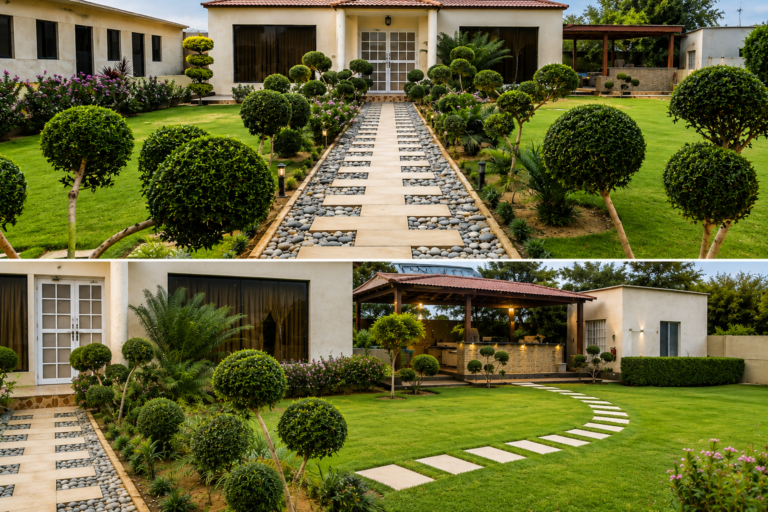
The most visually successful gardens typically layer plants by height and role rather than treating all planting as visually equivalent — tall structural elements like date palms anchor the overall composition, mid-height shrubs like bougainvillea or oleander fill the middle layer with color and texture, and ground cover or succulents complete the base layer close to eye level and foot traffic. This layered approach creates depth and visual interest that a flat, single-height planting scheme struggles to achieve regardless of how well any individual plant performs.
Plants for Privacy and Screening
Boundary and screening planting serves a genuinely functional purpose beyond aesthetics, providing privacy from neighboring properties and streets while also contributing to windbreak effects that protect more delicate interior planting from harsh, dust-laden wind. Species selected specifically for dense, consistent growth along boundaries — rather than purely ornamental value — tend to perform this functional role more reliably over the long term.
Container and Potted Plant Considerations
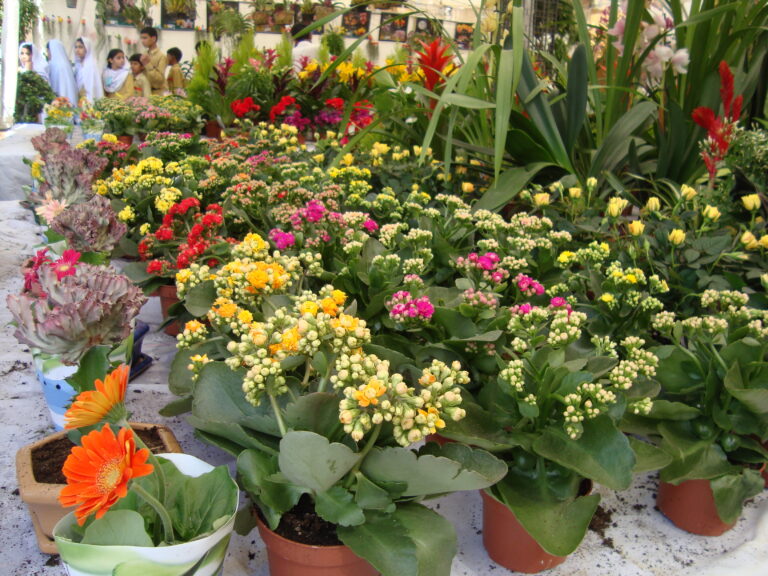
Container planting offers genuine flexibility for smaller spaces, balconies, or areas where in-ground planting isn’t practical, but containers face harsher conditions than in-ground beds — soil in a pot heats up and dries out considerably faster than ground-level soil, which means container plants generally need more frequent attention than the equivalent species would require if planted directly in the ground. Selecting appropriately sized containers with good drainage, and being realistic about the increased watering frequency containers require, prevents disappointment with an otherwise well-chosen plant.
Seasonal Color Without Sacrificing Water Efficiency
Homeowners wanting seasonal color variation don’t need to abandon water-efficient principles entirely — selectively incorporating a modest number of seasonal flowering annuals in prominent, smaller accent areas, while keeping the majority of the garden built around drought-tolerant perennial species, achieves visual variety through the year without dramatically increasing overall water demand. This targeted approach captures much of the benefit of seasonal color while keeping its water cost contained to a small, deliberately chosen portion of the garden.
Key Takeaways
- Genuine drought and heat tolerance should outweigh pure appearance in every plant decision
- Riyadh and Jeddah require meaningfully different plant selection priorities
- October through March is the strongest planting window across the region
- Plant quality and acclimation at purchase matter as much as species selection itself
Frequently Asked Questions
What are the best trees for a Riyadh villa garden?
Date palms remain one of the most reliable choices, offering heat tolerance, low long-term water needs, and manageable root behavior once established.
Do Jeddah gardens need different plants than Riyadh gardens?
Yes — Jeddah's coastal humidity and salt air call for species tolerant of both moisture and salt exposure, while Riyadh's dry heat prioritizes drought tolerance above nearly everything else.
What plants should I avoid in Saudi Arabia's climate?
Species adapted to consistently humid, mild climates and thin-leaved ornamental plants bred primarily for appearance generally struggle regardless of watering effort.
Is a full lawn a bad choice for a Saudi garden?
Not impossible, but a full lawn carries significantly higher water and maintenance costs than most alternatives, which is why many modern designs minimize or eliminate it.
When is the best time to plant a new garden in Saudi Arabia?
October through March, when cooler temperatures let new plants establish root systems before facing the following summer's heat.
Are succulents a good choice for Saudi gardens?
Yes, succulents and agave offer strong visual texture with very low water needs, making them well suited to accent areas and spots with limited irrigation access.
Why do some nursery-bought plants die quickly at home?
A mismatch between controlled nursery conditions and full outdoor exposure at home, combined with transplant shock, are common causes — a gradual introduction to final growing conditions reduces this risk.
What flowering plants provide color without high water needs?
Bougainvillea is one of the most reliable choices, providing color for most of the year with far less water than typical ornamental flowering plants.
Should I layer plants by height in my garden design?
Yes — layering tall structural plants, mid-height shrubs, and ground cover creates visual depth that a single-height planting scheme struggles to achieve, regardless of individual plant quality.
Do container plants need more water than the same species in the ground?
Yes, generally — soil in a container heats up and dries out faster than ground-level soil, so container plants typically need more frequent watering attention.
Get a Plant Palette Suited to Your Garden
Book a professional consultation and get planting recommendations for your specific property and city.
🌿 Get a Quote 💬 WhatsApp Us