Desert landscaping and xeriscaping in Saudi Arabia combine drought-tolerant plants, efficient drip irrigation, and materials like gravel and stone to build attractive gardens that use up to 60% less water than traditional lawn-heavy designs.
Xeriscaping gets reduced to ‘just using rocks instead of plants’ more often than any other landscaping approach, which undersells what it actually is: a complete design philosophy built specifically for climates like Riyadh’s. This guide covers everything from core principles to plant selection, irrigation, and real cost comparisons, so you can evaluate whether a xeriscape approach is right for your property.
What Xeriscape Landscaping Actually Means
Xeriscape landscaping is a design philosophy built around minimizing water use without sacrificing visual appeal — using drought-tolerant plants, efficient irrigation, and materials like gravel and natural stone in place of thirsty, high-maintenance lawn areas. It’s often misunderstood as simply “rocks instead of plants,” but a well-designed xeriscape garden includes real, deliberately chosen greenery — the difference lies in which plants are selected and how water reaches them, not whether planting happens at all.
In a city like Riyadh, where summer heat is extreme and rainfall is minimal for most of the year, xeriscape principles aren’t a stylistic trend — they’re the most practical way to build a garden that performs well without an unsustainable water bill.
The Core Principles Behind Every Xeriscape Design
Xeriscape design generally follows a consistent set of principles regardless of the specific plants or materials chosen. Group plants by water need so that thirstier species aren’t watered on the same schedule as drought-tolerant ones. Minimize turf area, since a full lawn is the single highest water-consumption element most gardens include. Improve soil to help it retain what moisture it does receive. Use mulch to reduce evaporation from exposed soil. And rely on efficient irrigation — specifically drip systems — that deliver water precisely rather than broadly.
These principles work together rather than independently; a xeriscape garden with the right plants but sprinkler irrigation, or the right irrigation but thirsty ornamental plants, won’t achieve the water savings the approach is capable of.
Building a Xeriscape Plant Palette
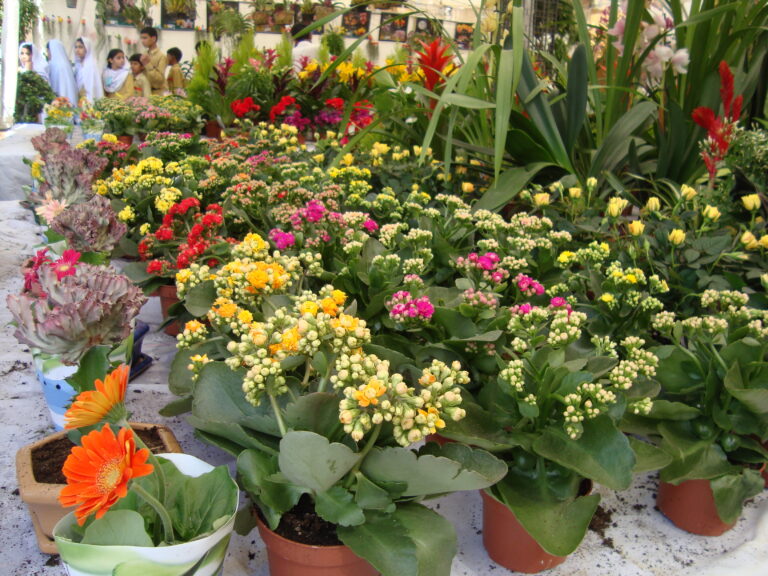
A strong xeriscape plant palette for Riyadh typically centers on species proven in arid, hot climates specifically. Date palms provide structure with minimal ongoing water needs once established. Succulents and agave offer strong visual texture in raised planters or accent areas with very low water requirements. Drought-tolerant flowering shrubs like oleander and bougainvillea provide color without the water demands of typical ornamental annuals. Native or regionally adapted ground covers fill space that would otherwise need frequent watering or weeding.
The goal isn’t to avoid color or visual interest — a well-planned xeriscape garden can look just as vibrant as a traditional one, simply built from a different, more climate-appropriate plant vocabulary.
Soil and Mulch: The Underrated Half of Xeriscaping
Plant selection gets most of the attention in xeriscape discussions, but soil preparation and mulch use are equally important to the approach’s water savings. Improving soil structure — particularly in Riyadh’s sandy-clay conditions — helps it hold moisture longer between waterings rather than draining away quickly. A consistent layer of organic or inorganic mulch across planting beds reduces evaporation from the soil surface significantly, which directly reduces how often irrigation needs to run.
Skipping this step is one of the most common reasons a “xeriscape” garden underperforms — the plant choices might be correct, but without proper soil and mulch, water use ends up higher than the design should require.
Designing Irrigation for a Water-Efficient Garden
Drip irrigation is effectively non-negotiable in a genuine xeriscape design, since it delivers water directly to the root zone with minimal loss to evaporation — the opposite of how sprinklers spray water into hot, dry air where a meaningful share never reaches the soil at all. Beyond the delivery method, zoning matters just as much: grouping plants with similar water needs onto the same irrigation zone prevents the common problem of a uniform schedule over-watering drought-tolerant plants while under-watering the few thirstier species included for variety.
Seasonal adjustment rounds out a well-designed system — even efficient drip irrigation needs less frequency in cooler months than during peak summer, and a system left on one fixed year-round setting gives up much of the water-saving potential xeriscaping is meant to deliver.
Integrating Hardscape Into a Desert Landscape
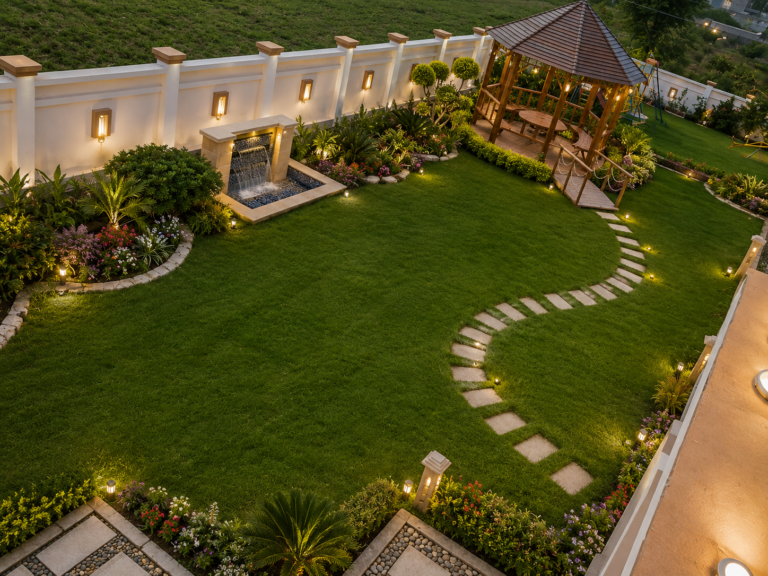
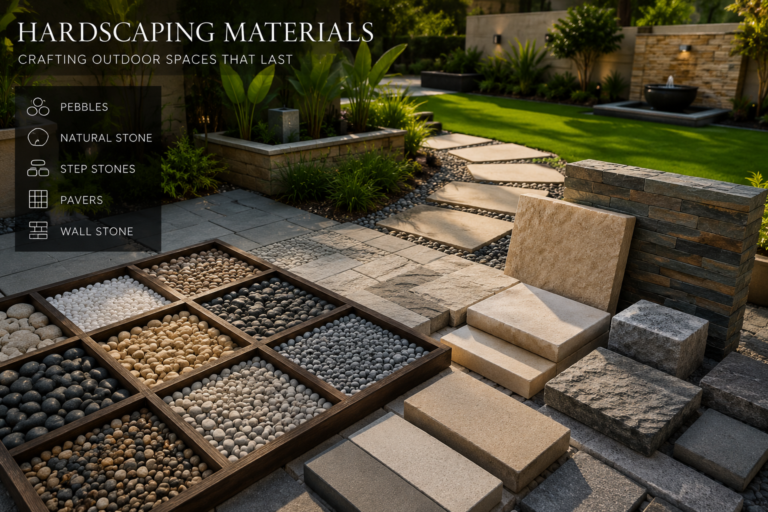
Gravel, decorative stone, and other hardscape elements do more than fill space in a xeriscape design — they replace what would otherwise be thirsty lawn or ground cover while adding structure and visual variety. Natural stone pathways, gravel borders, and decorative rock beds all drain quickly after Riyadh’s occasional heavy rain and require essentially no irrigation of their own, making them a genuinely functional design choice rather than a purely decorative one.
The most successful xeriscape gardens treat hardscape and planting as complementary rather than competing — using stone and gravel to define pathways and transition zones while reserving planting for focal points and areas where greenery adds the most value.
How Much Water Does Xeriscaping Actually Save?
Well-designed xeriscape gardens can reduce water use by up to 60% compared to a traditional lawn-heavy design, primarily by eliminating or drastically reducing turf area and replacing sprinkler irrigation with targeted drip systems. This isn’t a marginal improvement — in a climate like Riyadh’s, where irrigation represents a significant ongoing cost for any garden, this scale of reduction meaningfully changes the long-term cost of maintaining an attractive outdoor space.
The exact savings for any specific property depend on how much of the original design was lawn-dependent and how thoroughly the new design applies xeriscape principles — a partial conversion saves less than a full redesign, but even incremental changes toward these principles reduce water use.
Cost Comparison: Xeriscape vs Traditional Landscaping
Xeriscape landscaping isn’t necessarily cheaper to install than a traditional design — drought-tolerant plants and quality hardscape materials both carry real costs — but it’s typically far less expensive to maintain over time, given the dramatic reduction in water use and generally lower care demands of the plant palette involved. Homeowners evaluating cost should look at total cost of ownership over several years, not just the initial installation price, since this is where xeriscaping’s real financial advantage shows up.
For properties looking to convert an existing traditional garden rather than design new, a phased approach — reducing lawn area incrementally while introducing xeriscape principles — often makes the transition more manageable than an all-at-once overhaul.
Getting Started With a Xeriscape Project
A xeriscape conversion or new installation starts the same way any landscaping project should: with an honest assessment of the existing site, sun exposure, and how the space will actually be used. From there, a professional can recommend which xeriscape principles apply most directly to your specific property and priorities — whether that means a full redesign or a targeted reduction in lawn area paired with improved irrigation.
The most successful xeriscape projects treat it as a genuine design philosophy rather than simply “adding some rocks” to an existing layout, which is why working with someone experienced specifically in arid-climate design tends to produce noticeably better long-term results.
Xeriscaping for Jeddah's Coastal Conditions Versus Riyadh's Inland Climate
While xeriscape principles apply across Saudi Arabia, the specific plant and material choices differ meaningfully between Riyadh’s dry inland heat and Jeddah’s humid, salt-influenced coastal conditions. A xeriscape garden in Jeddah still prioritizes drought tolerance, but plant selection also needs to account for humidity tolerance and, for coastal properties specifically, salt spray resistance — considerations Riyadh gardens simply don’t need to factor in.
This means a xeriscape plant list built for Riyadh can’t simply be transplanted onto a Jeddah project without adjustment, even though the underlying design philosophy remains consistent across both cities.
Common Objections to Xeriscaping, Addressed Directly
The most common objection to xeriscaping is the concern that it will look barren or unfinished compared to a traditional lush garden. In practice, a well-designed xeriscape garden achieves genuine visual richness through texture variation, strategic use of color from drought-tolerant flowering species, and thoughtful hardscape integration — the perception of “barren” usually comes from poorly executed xeriscape attempts that skip proper design planning, not from the approach itself.
A second common concern is that xeriscaping locks a homeowner into a permanently fixed design with no room for change. In reality, xeriscape gardens can evolve over time just like any other garden style, simply within a planting palette that remains climate-appropriate.
How to Evaluate Whether Xeriscaping Fits Your Specific Property
Not every property benefits equally from a full xeriscape conversion — homes with significant existing mature planting that’s performing well may benefit more from a partial, targeted approach than a complete redesign. Properties with particularly high current water bills or visibly struggling lawn areas tend to see the most dramatic, immediately noticeable benefit from xeriscape principles. A professional assessment of your current garden’s water use and plant health is the most reliable way to determine how much conversion genuinely makes sense for your specific situation.
Xeriscaping and Long-Term Property Value
As water costs and environmental awareness both continue to shape homeowner priorities in Saudi Arabia, a well-executed xeriscape garden increasingly reads as a thoughtful, forward-looking investment rather than a compromise. Properties with visibly water-efficient, well-maintained landscaping often present more favorably to prospective buyers or tenants who are themselves increasingly conscious of ongoing utility costs, making xeriscaping a consideration worth weighing beyond pure aesthetic or environmental preference alone.
Key Takeaways
- Xeriscaping is a complete design philosophy, not just a plant or material swap
- Soil and mulch matter as much as plant choice for real water savings
- Drip irrigation with proper zoning is essential to achieving xeriscaping's water reduction potential
- Water savings of up to 60% are achievable with a thorough, well-designed conversion
Frequently Asked Questions
Does xeriscaping mean no grass at all?
Not necessarily — some xeriscape designs retain a small, purposeful lawn area, but most significantly reduce or eliminate full turf coverage in favor of drought-tolerant planting, gravel and stone.
How much water does xeriscape landscaping actually save?
Well-designed xeriscape gardens typically use up to 60% less water than a traditional lawn-heavy garden in a climate like Riyadh's.
Is xeriscaping cheaper than traditional landscaping?
Installation costs are comparable, but xeriscaping is typically far less expensive to maintain over time due to significantly reduced water use and lower care demands.
Can I convert my existing garden to xeriscape gradually?
Yes, a phased approach — reducing lawn area incrementally and introducing drought-tolerant planting over time — is a practical way to transition without a full redesign all at once.
What plants are used in xeriscape landscaping in Riyadh?
Common choices include date palms, succulents and agave, oleander, bougainvillea, and other species specifically proven to handle Riyadh's heat and low rainfall.
Does xeriscaping still need irrigation?
Yes — even drought-tolerant plants need some irrigation, especially while establishing, but drip irrigation delivers this far more efficiently than sprinklers.
Is xeriscaping only for desert climates?
Xeriscape principles apply anywhere water efficiency matters, but they're especially well suited to arid climates like Riyadh's where water savings have the biggest practical impact.
How do I know if xeriscaping is right for my property?
A professional consultation assessing your current design, water use, and priorities is the best way to determine how much xeriscape conversion makes sense for your specific garden.
Does xeriscaping look the same in Jeddah as it does in Riyadh?
The underlying design principles are the same, but specific plant and material choices differ — Jeddah's coastal xeriscape designs need humidity and salt tolerance that Riyadh's inland projects don't require.
Will a xeriscape garden look bare or unfinished?
Not if properly designed — a well-executed xeriscape garden achieves genuine visual richness through texture, color from drought-tolerant flowering plants, and thoughtful hardscape integration.
Explore Xeriscape Landscaping for Your Property
Book a professional consultation and see what a water-efficient design could look like for your garden.
🌿 Get a Quote 💬 WhatsApp Us