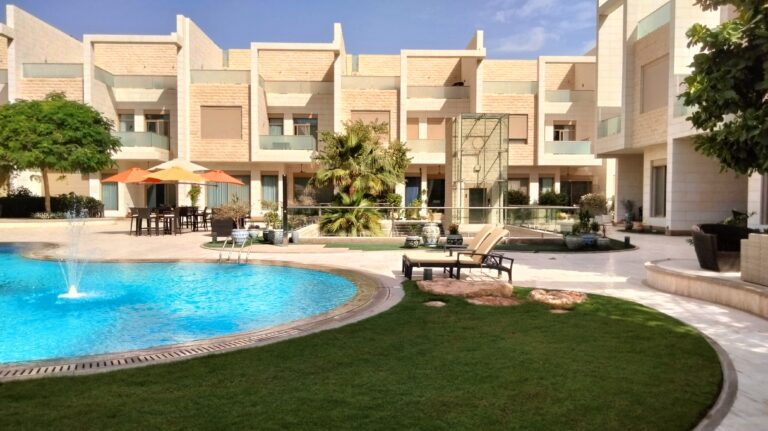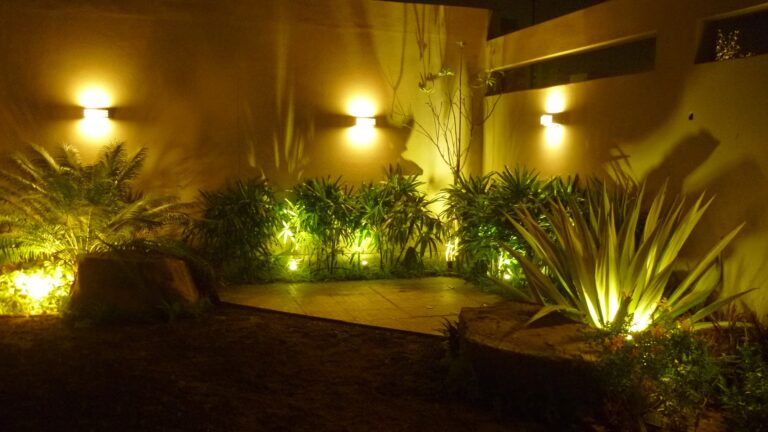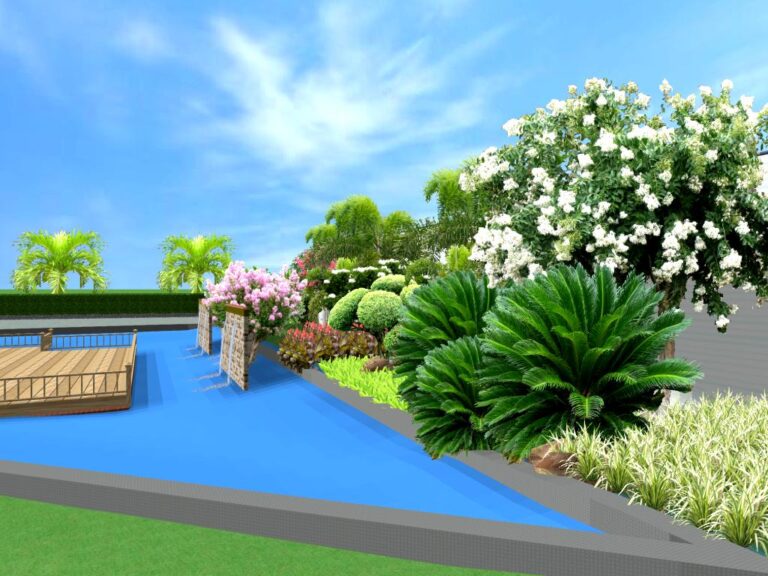
The right landscaping materials for Saudi Arabia depend on your specific city’s climate — light-toned, heat-reflective stone and dust-resistant choices suit Riyadh’s dry heat, while corrosion-resistant fittings and salt-tolerant finishes matter more in Jeddah’s coastal, humid conditions.
Material choice in a Saudi landscaping project affects far more than appearance — it determines how comfortable a patio feels underfoot, how long outdoor fixtures actually last, and whether a garden’s soil can support the plants chosen for it. This guide walks through every major material category and how to match choices within each one to your specific city’s climate.
Why Material Choice Matters More in Saudi Arabia
Landscaping materials that perform well in a mild, temperate climate don’t automatically perform the same way under Riyadh’s intense heat or Jeddah’s humidity and salt air — which is why material selection deserves as much attention as plant choice or irrigation design. A stone that looks identical to another in a showroom can behave very differently once installed, absorbing more heat, fading faster in direct sun, or corroding more quickly near the coast.
This guide covers the main material categories used across Saudi landscaping projects, what distinguishes good choices from poor ones in this specific climate, and roughly how costs compare across categories.
Natural Stone: Options and Considerations
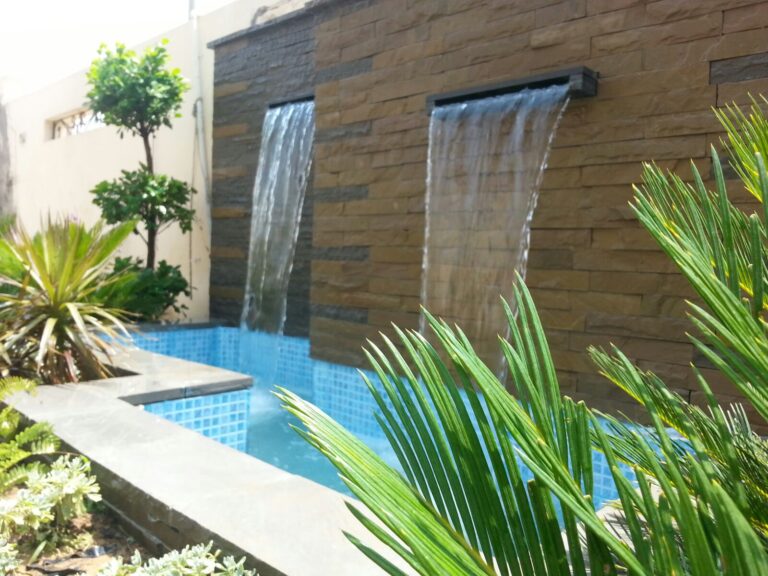
Natural stone remains one of the most popular hardscape materials for its durability and distinctive, premium appearance, but color and finish matter significantly in Saudi Arabia’s climate. Light-toned stone stays noticeably cooler underfoot than dark stone under direct sun, while a mid-tone beige or sand color typically balances heat absorption with reduced glare better than pure white. Finish also matters — a honed or textured surface provides better slip resistance than a highly polished one, particularly relevant near pool decks or water features.
Within “natural stone” as a category, price and performance vary considerably by specific type and origin, making this one of the biggest levers for adjusting a project’s material cost up or down without changing the overall design.
Gravel and Decorative Aggregate
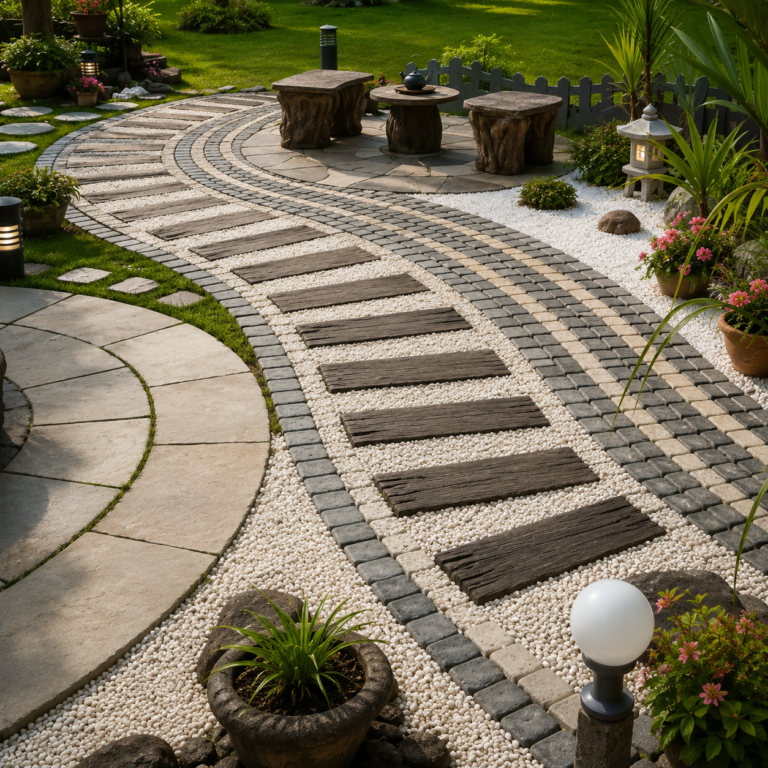
Gravel and decorative stone aggregate serve multiple functions in Saudi landscaping — filling space that would otherwise need thirsty ground cover, providing excellent drainage after occasional heavy rain, and adding visual texture and variety at a lower cost than solid paving. Different gravel sizes and colors serve different purposes: finer material works well in planting beds, while larger aggregate suits pathways and drainage zones.
Gravel’s practical advantage in this climate is significant: unlike grass or dense ground cover, it requires essentially no irrigation of its own and drains quickly, avoiding the standing water that can develop after Jeddah’s occasional intense rainfall or Riyadh’s rare downpours.
Mulch, Soil, and Ground Preparation Materials
Quality soil and mulch don’t get the visual attention that stone or paving does, but they arguably matter more to a garden’s actual success. Riyadh’s naturally sandy, sometimes alkaline soil often needs amendment before planting to support healthy root development, particularly for species not specifically adapted to unmodified local conditions. Organic mulch spread across planting beds retains soil moisture, moderates soil temperature, and gradually improves soil structure as it breaks down — directly reducing how much irrigation a bed needs to stay healthy.
Skipping proper soil preparation to save on upfront cost is one of the most common ways a landscaping project underperforms relative to its design intent, since even correctly chosen plants struggle in poorly prepared ground.
Sand, Fill, and Drainage Materials
Sand and fill materials serve essential but often invisible roles in a landscaping project — as a base layer under paving, for drainage channels, and for leveling ground before installation. Poor-quality or incorrectly specified fill material is a common hidden cause of paving problems that surface months or years after installation, including uneven settling and cracking that traces back to inadequate ground preparation rather than the visible surface material itself.
Drainage-specific materials, including gravel layers and perforated piping in more involved installations, matter particularly in areas prone to water pooling — getting this right during initial construction is far less costly than retrofitting drainage after a problem develops.
Hardscape Structural Materials
Beyond decorative stone and paving, structural hardscape materials include everything from paver edging and retaining wall block to pergola framing and outdoor lighting fixtures. Material choice here affects both appearance and longevity — outdoor-rated fixtures and corrosion-resistant fittings matter significantly more in Jeddah’s coastal, salt-laden air than they do inland, where standard fittings hold up reasonably well.
Structural materials are also where cost differences between contractors often become most apparent, since two seemingly similar quotes can specify very different grades of edging, fastening hardware, or structural framing — differences that don’t show up in a casual comparison but matter significantly for how long the installed work actually lasts.
Sourcing Materials: Local vs Imported
Some landscaping materials are readily available from local Saudi suppliers, while others — particularly certain natural stone types or specialty plants — may require importing, which affects both cost and project timeline. Locally sourced materials generally cost less and arrive faster, while imported options sometimes offer specific aesthetic qualities or plant varieties not locally available, at a corresponding premium in both price and lead time.
A knowledgeable landscaping contractor can advise on which imported materials genuinely justify their added cost and timeline for your specific project, versus where a comparable local alternative achieves a similar result more efficiently.
Matching Materials to Riyadh's Climate vs Jeddah's Climate
While many material categories work in both cities, the specific choices within those categories often differ. Riyadh’s dry heat makes heat-reflective, light-toned paving and dust-resistant plant foliage particularly valuable, while material concerns center more on temperature extremes and low humidity. Jeddah’s coastal humidity and salt air shift the priority toward corrosion-resistant metal fittings, salt-tolerant stone finishes, and drainage materials suited to occasional intense rainfall.
A landscaping company genuinely experienced in both markets should be able to explain these distinctions clearly for your specific city and district, rather than applying an identical material specification regardless of location.
Understanding Material Cost Ranges
Material costs vary enormously even within a single category — the same square meter of “natural stone paving” can range widely in price depending on stone type, origin, and finish quality. This variability is exactly why a detailed, itemized quote specifying exact materials matters far more than a generic total price when comparing options or contractors, since two projects described in similar general terms can use materials with meaningfully different costs and performance.
Understanding this variability also gives homeowners a genuine lever for fitting a project to a specific budget — adjusting material tier within a category, rather than cutting scope entirely, is often the most efficient way to bring a project in line with what you’re prepared to spend.
How Material Choices Interact With Overall Design Style
Material selection doesn’t happen in isolation from the broader garden design — a modern, minimal villa design typically pairs well with cleaner-lined stone and simpler gravel treatments, while a more traditional or lush design often calls for materials with more natural texture and variation. Coordinating material choice with your overall design direction from the start avoids the mismatched feeling that can result from selecting materials purely on individual merit without considering how they’ll read together across the finished garden.
Sustainable and Locally Sourced Material Options
Increasing interest in sustainable landscaping has brought more attention to locally sourced materials, which typically carry a smaller transportation footprint than imported alternatives while often costing less and arriving faster for your project. Recycled or repurposed hardscape materials are also becoming more available in the regional market, offering an additional option for homeowners specifically interested in a more environmentally considered material approach without sacrificing quality or durability.
Testing Materials Before Committing to a Full Order
For larger projects, requesting physical samples of key materials — a specific stone type, a particular gravel color — before committing to a full order lets you see how a material actually looks and feels under your property’s specific lighting and setting, which can differ meaningfully from how it appeared in a showroom or catalog. This small extra step is particularly worthwhile for prominent, highly visible elements like main patio paving, where the material choice has an outsized effect on the finished garden’s overall impression.
Long-Term Material Durability in Saudi Arabia's Climate
Beyond initial performance, material durability over years of exposure to Saudi Arabia’s climate extremes deserves genuine consideration during selection. Repeated temperature swings between day and night can cause certain materials to expand and contract in ways that create stress cracks over time, particularly at joints between sections. Materials with a track record of genuine long-term performance in this specific climate — rather than materials simply marketed as durable in general terms — tend to hold up meaningfully better across a property’s lifespan.
Key Takeaways
- Material choice affects both appearance and long-term performance in Saudi Arabia's climate
- Soil and mulch matter as much to a garden's success as visible hardscape materials
- Jeddah's coastal conditions call for different material priorities than Riyadh's dry heat
- Material tier is one of the biggest cost levers within an otherwise similar design
Frequently Asked Questions
What paving color is best for Saudi Arabia's heat?
Light or mid-tone stone stays noticeably cooler underfoot than dark stone in direct sun, making it a more comfortable and practical choice for most outdoor paved areas.
Do I need different materials for a Jeddah garden versus a Riyadh garden?
Jeddah's coastal humidity and salt air call for corrosion-resistant fittings and salt-tolerant finishes that matter less in Riyadh's inland, dry climate — the underlying material categories are similar, but specific choices differ.
Is imported stone worth the extra cost?
This depends on the specific project and aesthetic goals — some imported materials offer qualities not available locally, but a knowledgeable contractor can advise where a local alternative achieves a similar result more efficiently.
Why does soil preparation matter if I'm choosing good plants?
Even well-chosen, climate-appropriate plants struggle in poorly prepared soil, making proper soil amendment and mulch as important to a garden's success as the plant selection itself.
What's the cheapest hardscape material option?
Gravel and decorative aggregate are generally the most budget-friendly hardscape option, offering good drainage and visual texture at a lower cost than solid paving.
How much does material quality affect total landscaping cost?
Significantly — material tier within the same general category can shift total project cost substantially, making it one of the biggest levers for adjusting a design to fit a specific budget.
Do outdoor light fixtures need special materials in Jeddah?
Yes, corrosion-resistant fittings are particularly important in Jeddah's coastal, salt-laden air, where standard fixtures can fail well before their expected lifespan.
Can poor drainage materials cause paving problems later?
Yes — inadequate fill or drainage materials beneath paving are a common hidden cause of cracking and uneven settling that surfaces months or years after installation.
Should I coordinate material choices with my overall garden design style?
Yes — material selection works best when coordinated with your broader design direction, since materials that individually look appealing can feel mismatched if chosen without considering how they'll read together.
Can I see material samples before committing to a full order?
Yes, and this is particularly worthwhile for prominent elements like main patio paving, since materials can look different under your property's actual lighting than they did in a showroom.
Get Material Guidance for Your Project
Book a professional consultation and get material recommendations suited to your climate and budget.
🌿 Get a Quote 💬 WhatsApp Us