25 Backyard Landscaping Ideas for Jeddah Homes
A coastal climate guide — real design ideas built for Jeddah’s humidity, heat, and salt air, not borrowed from a cooler city’s Pinterest board.
A backyard in Riyadh and a backyard in Jeddah are not the same design problem. Riyadh deals with dry heat and dust. Jeddah deals with something trickier: heat combined with humidity, salt-laden air rolling in off the Red Sea, and evenings that stay warm long after the sun goes down. Good backyard landscaping in Jeddah means choosing plants, materials, and layouts that actually survive that combination — not borrowing a Pinterest board designed for a cooler, drier city.
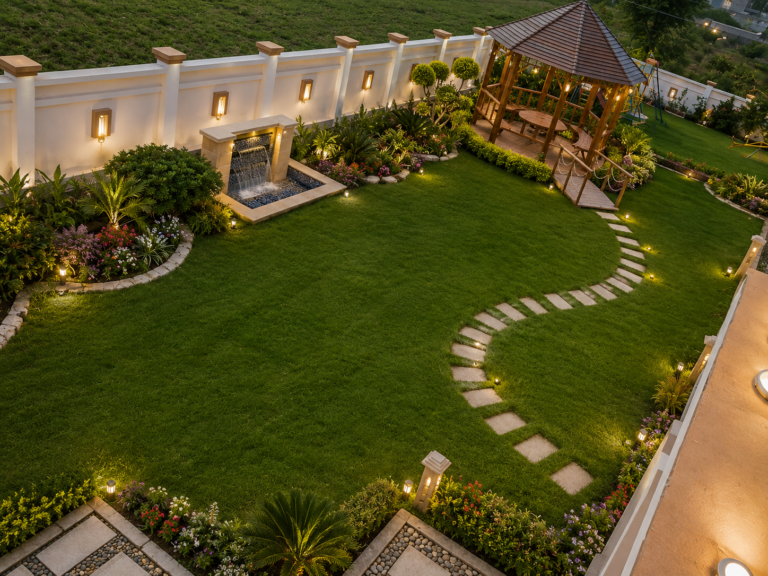
Below are 25 ideas that work with Jeddah’s climate instead of fighting it, grouped into shaded living spaces, planting choices, water features, hardscape, and lighting. Use them as a starting menu, then adjust for your plot size, orientation, and budget.
Shaded Seating & Outdoor Living Ideas
Build a shaded majlis as the anchor of the yard
In Jeddah’s climate, an outdoor seating area only gets used if it’s shaded from roughly 10am to 4pm. A pergola-covered majlis with low seating, floor cushions, and a low table works well for family gatherings and gives the whole backyard a clear focal point to design around.
Add a retractable shade sail over the main seating zone
Shade sails cost less than a permanent pergola and can be angled to block the harshest afternoon sun, which in Jeddah comes from the west. They also handle the occasional gusty coastal wind better than fixed awnings if properly tensioned.
Create a covered outdoor dining nook near the kitchen
Placing a small dining set close to an interior kitchen door cuts down on the walking distance during the hottest months, when even a 20-second walk across open pavers feels long.
Install a vertical living wall for a shaded courtyard
A green wall of drought-tolerant, humidity-tolerant vine species (such as bougainvillea trained on a frame) softens hard courtyard walls and drops the surface temperature nearby.
Design a sunken conversation pit with built-in seating
Lowering a seating area by even one or two steps creates a natural windbreak and a sense of enclosure, which works especially well for evening use once the coastal breeze picks up.
Planting Choices That Actually Survive Jeddah
Choose salt-tolerant shrubs for boundary planting
Plants near boundary walls facing the sea-facing side of the property take the brunt of salt-laden air. Species like oleander and tamarisk tolerate salt spray far better than typical ornamental shrubs.
Use date palms as a structural, low-maintenance backbone
Date palms are native to the region, require comparatively little irrigation once established, and give a backyard an instantly local, high-end look without the upkeep of a lawn.
Add bougainvillea for color without the water bill
Bougainvillea thrives in Jeddah’s heat, tolerates humidity, and produces color for most of the year with far less irrigation than flowering annuals.
Group succulents and agave in raised planters
Raised planters with succulents and agave give you strong visual texture near seating areas while keeping water use low and drainage simple, which matters in humid air where waterlogged soil invites root rot.
Plant a fragrant jasmine screen along a fence line
Arabian jasmine handles Jeddah’s humidity well and releases scent in the evening, which is exactly when most families are outside.
Use potted citrus trees near the kitchen or dining area
Container-grown lime or lemon trees do reasonably well in Jeddah if given afternoon shade and consistent drip irrigation, and they double as a functional herb-and-fruit source.
Install a rooftop or elevated planter row for extra greenery
On smaller plots, elevated planter boxes along a wall or rooftop edge add greenery without eating into usable ground-level seating space.
Hardscape & Ground Surface Ideas
Choose light-colored paving over dark stone
Dark pavers absorb heat and can become uncomfortably hot underfoot by midday. Light beige or sand-toned interlock stays noticeably cooler and also reflects glare less harshly than pure white.
Add a gravel border instead of grass along walkways
Gravel drains fast after Jeddah’s occasional heavy downpours, needs no mowing, and avoids the constant irrigation a grass strip would require in high humidity.
Install permeable paving to handle sudden rain events
Jeddah’s rainfall is infrequent but can be intense when it happens. Permeable paving reduces pooling and prevents standing water, which in a humid climate quickly attracts mosquitoes.
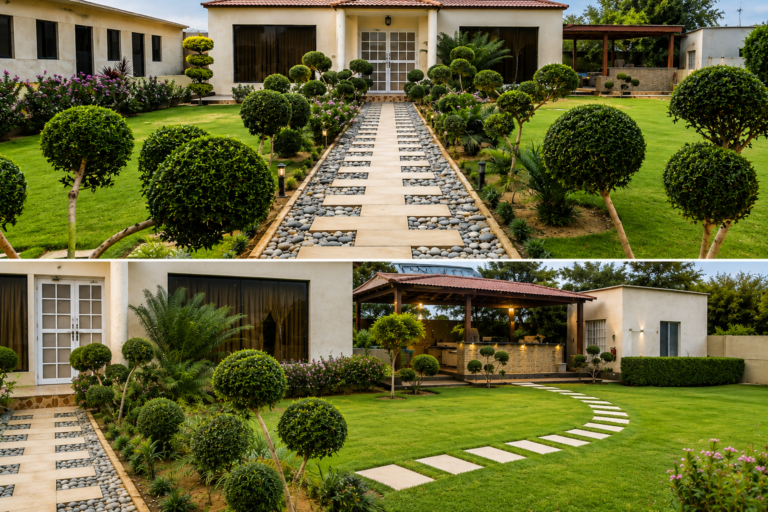
Use natural stone stepping pads through planting beds
A stepping-stone path through a planted bed reads as more relaxed and coastal than a straight poured-concrete walkway, and it lets planting spread more organically around it.
Build a low decorative wall to break up wind and sightlines
A knee-high stone or rendered wall creates privacy from neighboring plots and blocks ground-level wind without fully enclosing the space the way a tall fence does.
Add a fire pit area for cooler evening hours
Jeddah evenings from late autumn through winter are genuinely pleasant. A simple gas or wood fire pit with surrounding seating extends outdoor use into the parts of the year when it’s most comfortable.
Water Features & Irrigation Ideas
Install a small reflective water feature, not a large pond
A shallow, reflective water feature — a rectangular basin or wall-mounted water sheet — adds a cooling visual effect without the maintenance burden or mosquito risk of a large open pond in humid air.
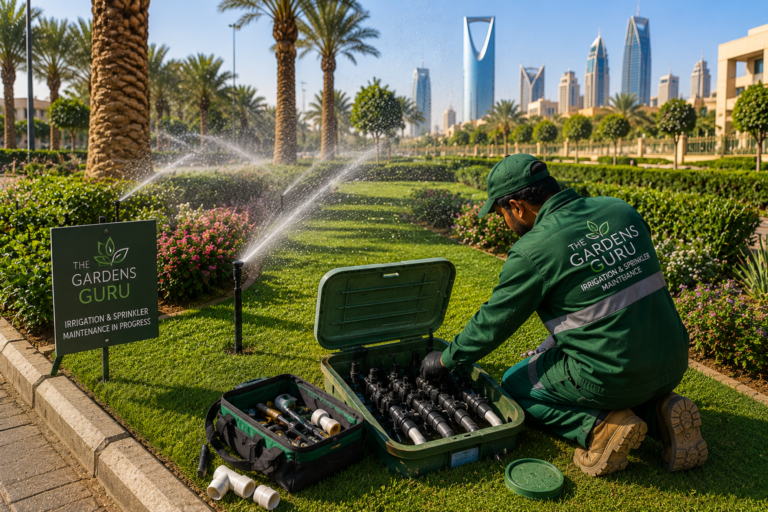
Switch the whole yard to drip irrigation on a timer
Drip irrigation delivers water directly to the root zone instead of spraying it into humid air where a share evaporates before reaching the soil. Pairing it with an automated timer set for early morning watering is the single highest-impact upgrade for a Jeddah backyard’s water efficiency.
Add a rain garden pocket near a downspout
A small planted depression that catches roof runoff during the rare heavy-rain events prevents pooling near the foundation and puts that water to use instead of losing it to drainage.
Use mulch generously around all planting beds
Organic mulch keeps soil temperature down and slows evaporation, which matters even in humid air, because Jeddah’s soil surface still bakes hard under direct midday sun.
Lighting & Evening Comfort Ideas
Prioritize warm, low-glare landscape lighting over bright floodlights
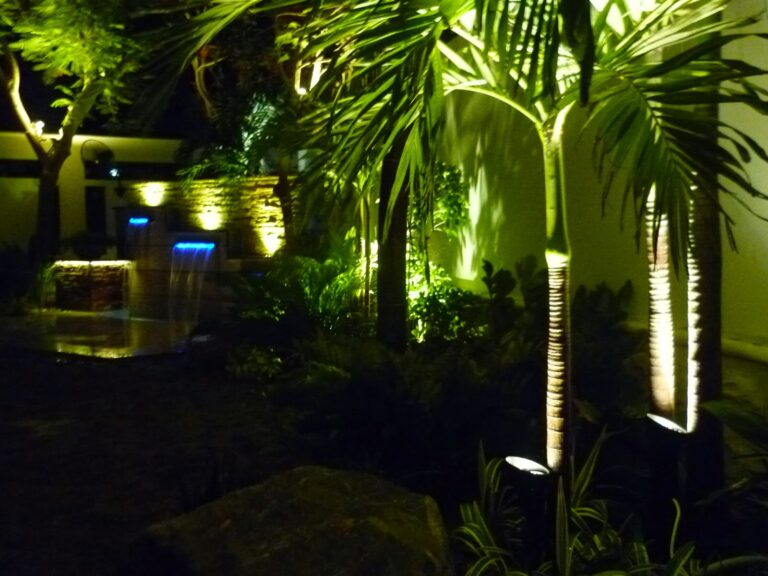
Because outdoor living in Jeddah happens mostly after sunset, lighting quality matters more than in cooler cities where daytime use is common. Warm-toned path lights and uplighting on palms or walls create atmosphere without the harsh glare of floodlighting.
Add string lighting across a pergola or seating area
Overhead string lighting is inexpensive, easy to retrofit onto an existing pergola, and instantly makes an evening seating area feel finished.
Use uplighting on statement plants or architectural walls
A single well-placed uplight on a mature date palm or a textured stone wall creates a dramatic focal point after dark, which is when most of a Jeddah backyard’s real use happens.
How to Prioritize These Ideas on a Budget
Not every backyard needs all 25 elements at once. A practical order of priority for most Jeddah homes:
Shade first. Without shade, no other feature gets used during the day.
Irrigation second. Switching to drip irrigation pays for itself in reduced water bills and healthier plants.
Planting third. Choose salt- and heat-tolerant species before investing in ornamentals that will struggle.
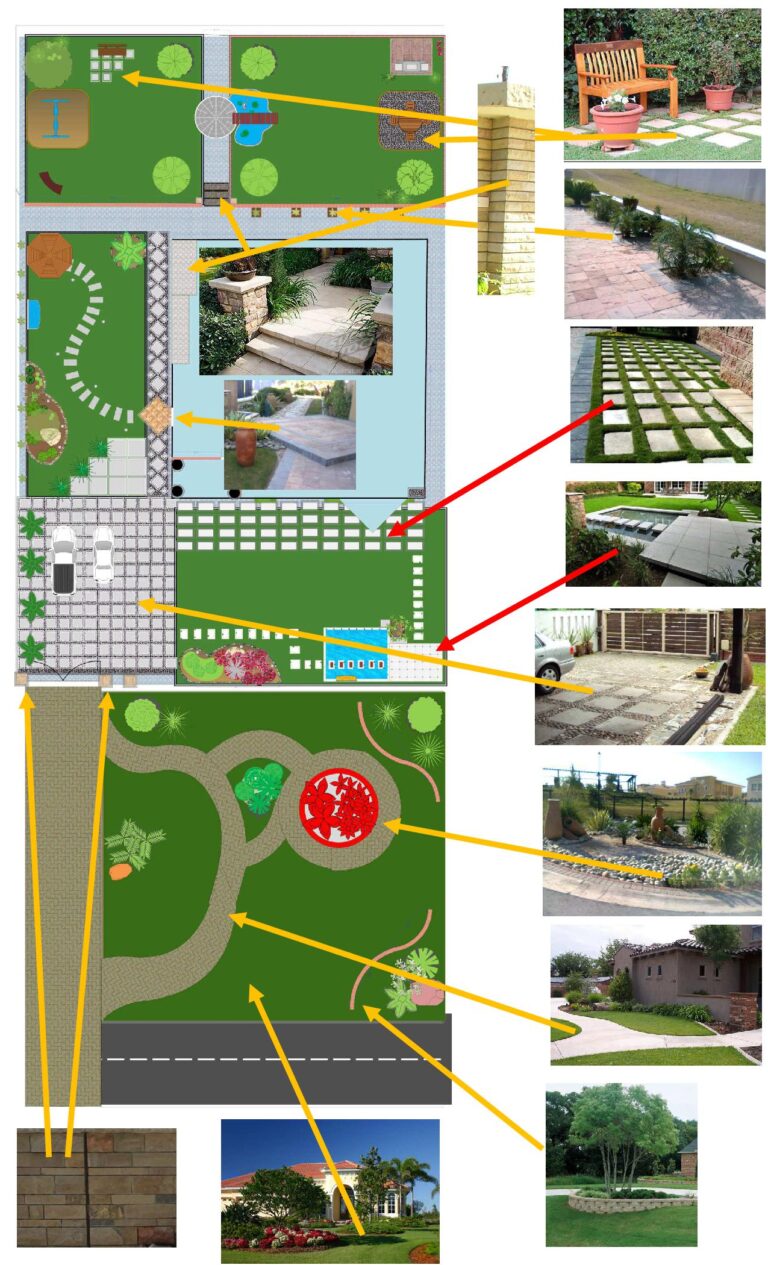
Hardscape fourth. Paving and walls are the most expensive and permanent element, so get the layout right before pouring anything.
Lighting last. Lighting is the cheapest way to make a finished yard feel complete, and it’s easy to add once the rest is in place.
Frequently Asked Questions
What backyard plants survive Jeddah’s humidity and salt air best?
Salt-tolerant, heat-adapted species like oleander, tamarisk, bougainvillea, and date palms consistently outperform typical ornamental garden plants in Jeddah’s coastal conditions.
Is grass a realistic option for a Jeddah backyard?
Natural grass is possible but demands heavy irrigation and frequent mowing in Jeddah’s climate. Many homeowners get a similar visual effect with less upkeep using artificial grass or a gravel-and-planting mix instead.
How much shade does a Jeddah backyard actually need?
As a rule of thumb, cover at least the main seating and dining area from late-morning through mid-afternoon sun. A pergola, shade sail, or mature tree canopy over that zone makes the biggest difference in how often the space actually gets used.
Does a backyard water feature attract mosquitoes in Jeddah’s humidity?
Standing or stagnant water is the real risk factor, not water features in general. A shallow, circulating, or wall-mounted water feature with no standing pool is far lower risk than an open pond.
What’s the most cost-effective backyard upgrade for Jeddah homes?
Switching to drip irrigation on a timer is usually the highest-value single upgrade — it cuts water waste, keeps plants healthier in high heat, and is far cheaper than hardscape or structural changes.
Should backyard paving be light or dark colored in Jeddah?
Light-toned paving stays noticeably cooler underfoot than dark stone and reflects less glare, making it the more comfortable choice for a climate this hot.
Can I landscape a small Jeddah backyard the same way as a large villa garden?
The same principles apply — shade, salt-tolerant planting, efficient irrigation — but on a small plot, prioritize vertical elements like living walls and elevated planters to add greenery without losing usable floor space.
When is the best time of year to plant a new backyard garden in Jeddah?
The cooler months, roughly October through March, give new plantings the best chance to establish roots before facing peak summer heat.
Do I need a professional for backyard landscaping, or can I DIY it?
Simple additions like planters, mulch, and lighting are manageable as DIY projects. Irrigation design, drainage for rain events, and larger hardscape work are worth having a professional assess first, since mistakes there are expensive to undo.
How do I stop my backyard plants from browning in Jeddah’s summer?
Consistent early-morning drip irrigation, a thick layer of mulch, and choosing species already adapted to heat and salt air are the three most effective ways to prevent summer browning.
Turning These Ideas Into a Real Backyard
Ideas are the easy part. Getting the shade angles, drainage, plant selection, and irrigation right for your specific plot is where most DIY backyard projects in Jeddah run into trouble. If you’d rather start with a site visit and a design built around your actual yard, our Jeddah landscaping team can put together a plan and a transparent quote.
🌿 Get a Professional Jeddah QuoteWhat’s the one thing about your backyard that’s held you back from using it more? That’s usually the right place to start.